


Bugs & Butterflies UK
Yellow Mormon Swallowtail EGGS (Papilio lowi)
Yellow Mormon Swallowtail EGGS (Papilio lowi)
Couldn't load pickup availability
Yellow Mormon Butterfly (Papilio lowi)
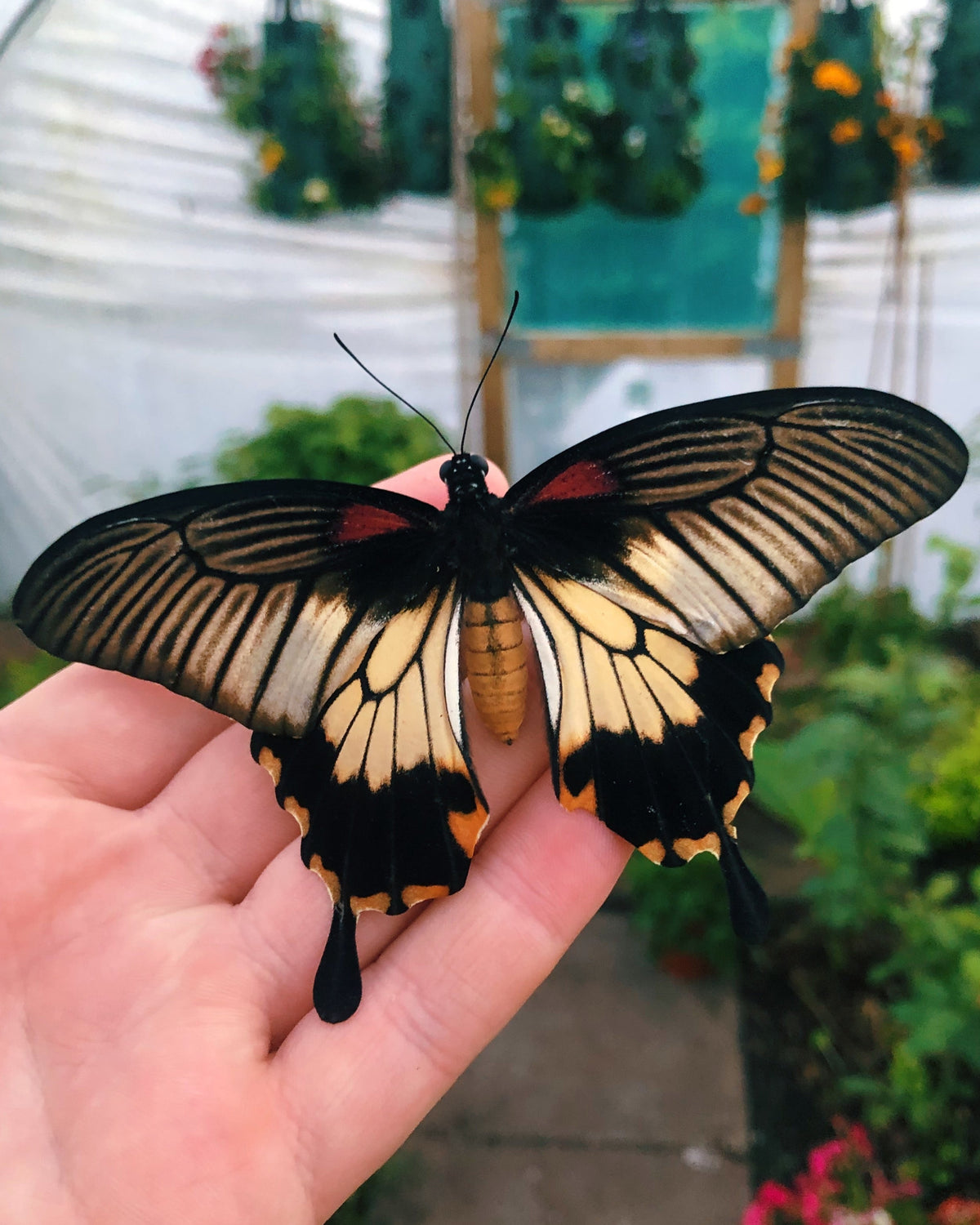
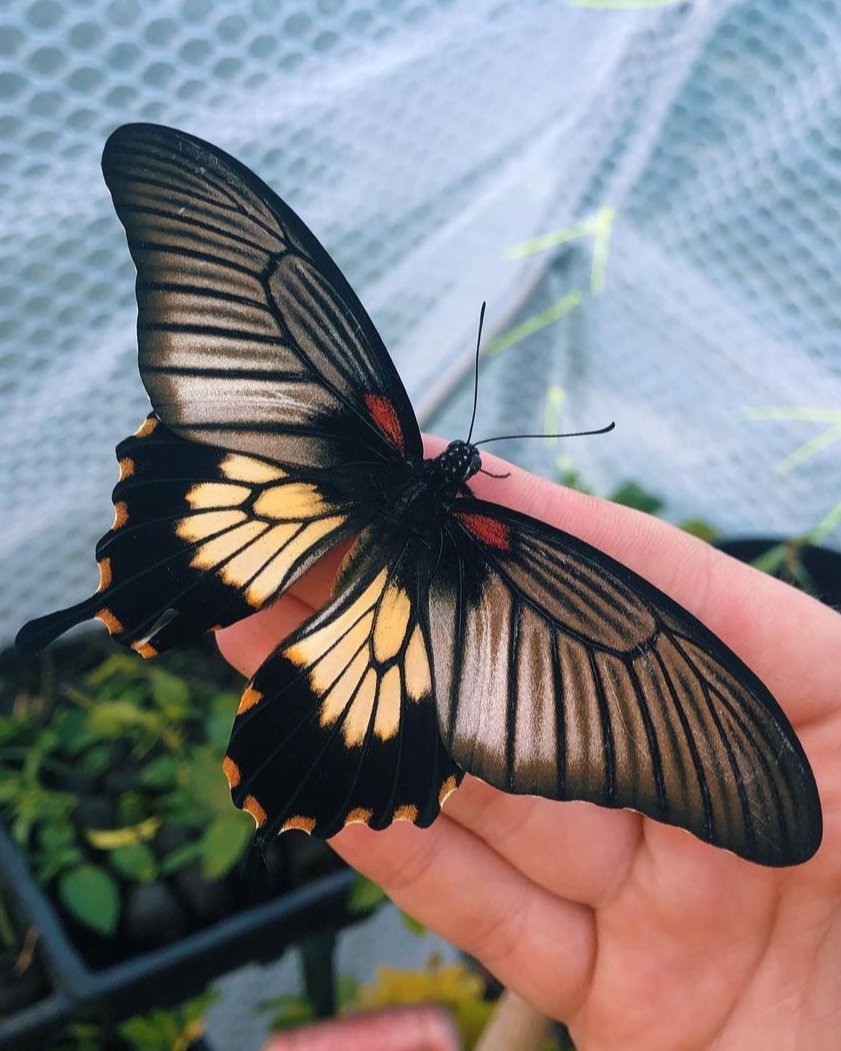
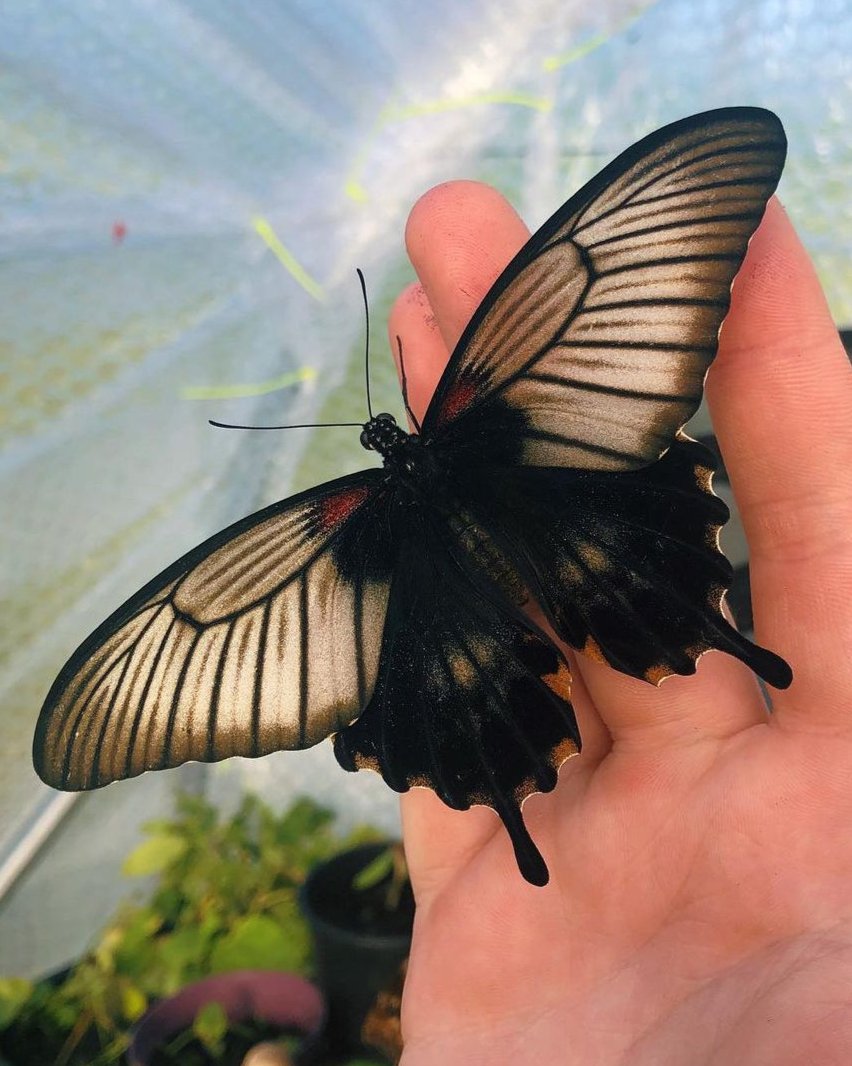
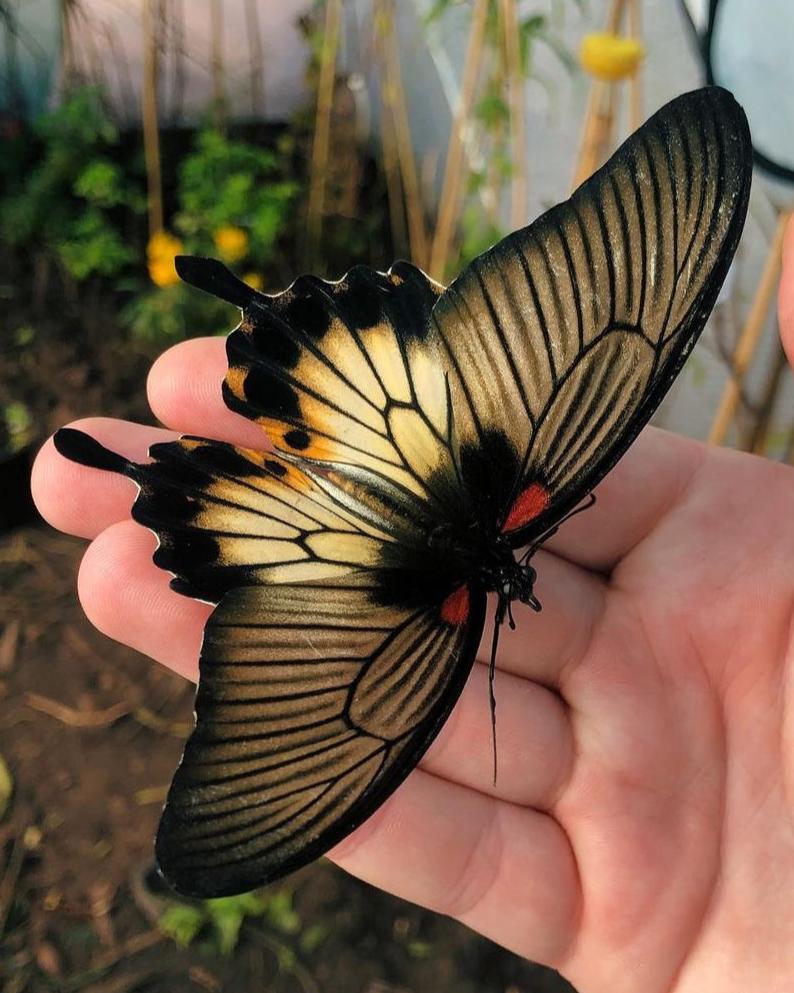
Papilio lowi, commonly known as the Yellow Mormon, is a large and visually striking species of swallowtail butterfly in the Papilionidae family. Native to Borneo, Indonesia, and the Philippines, this impressive butterfly is renowned for its bold yellow and black coloration, making it one of the most eye-catching species in its native range.
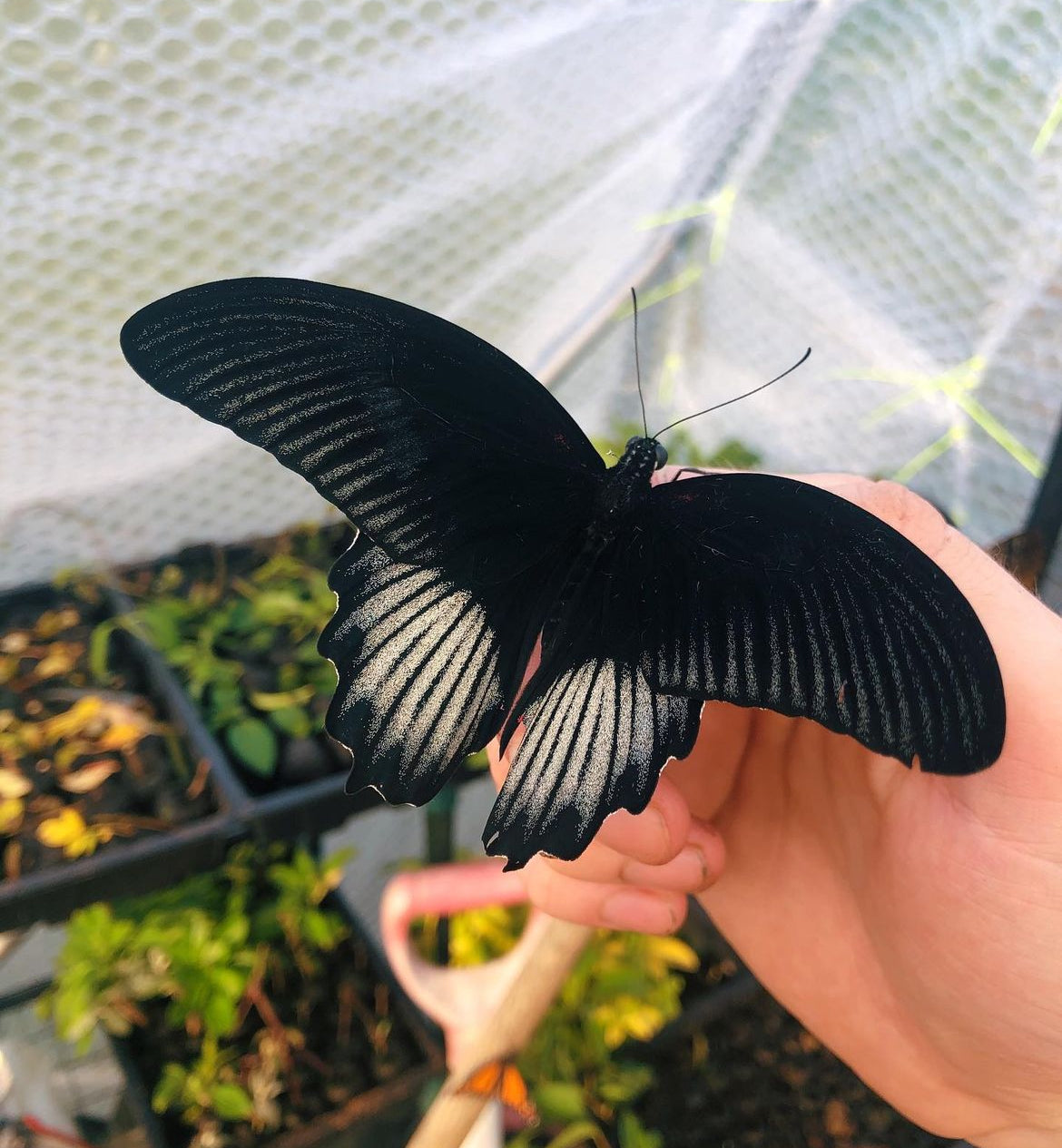
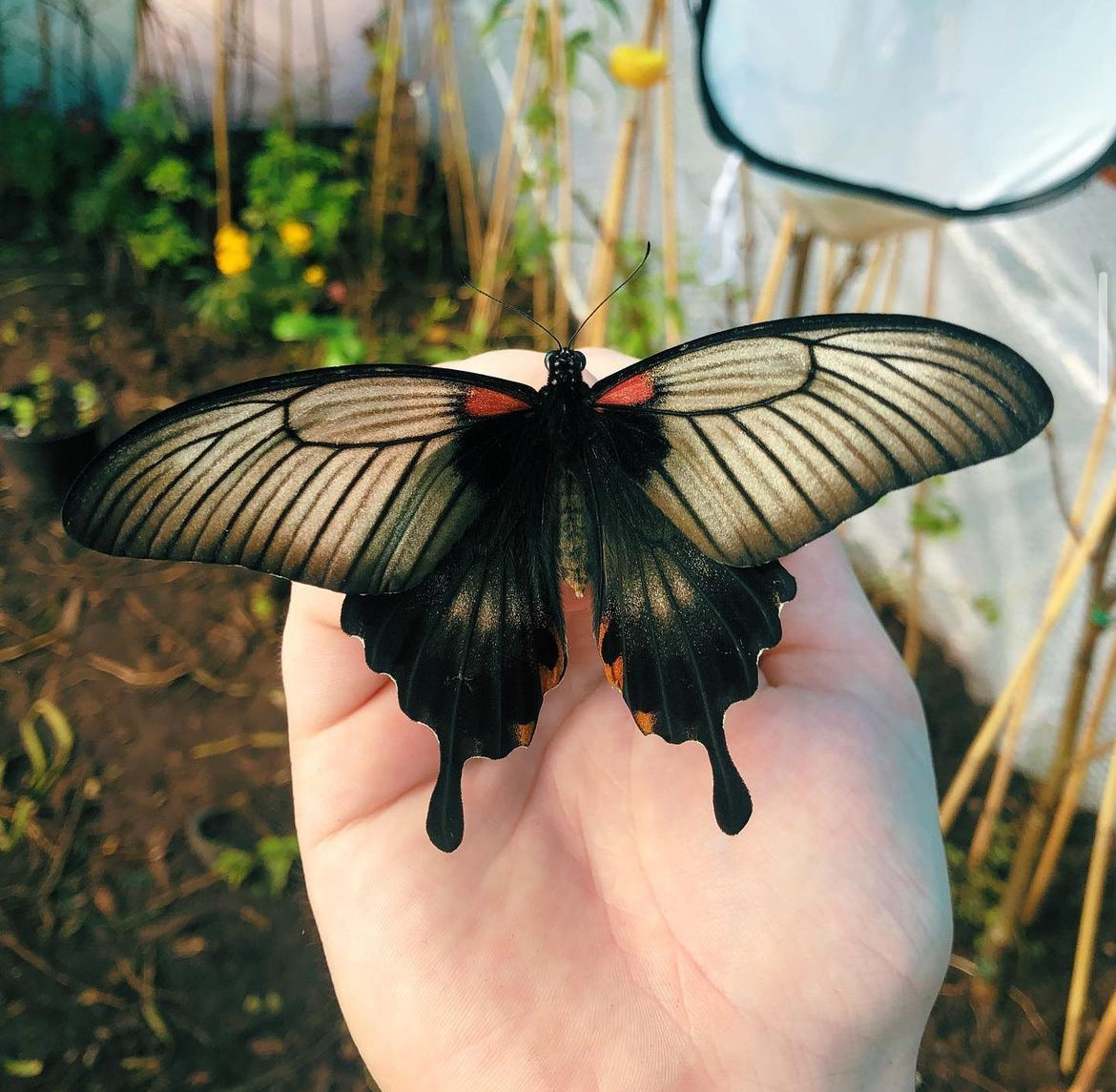
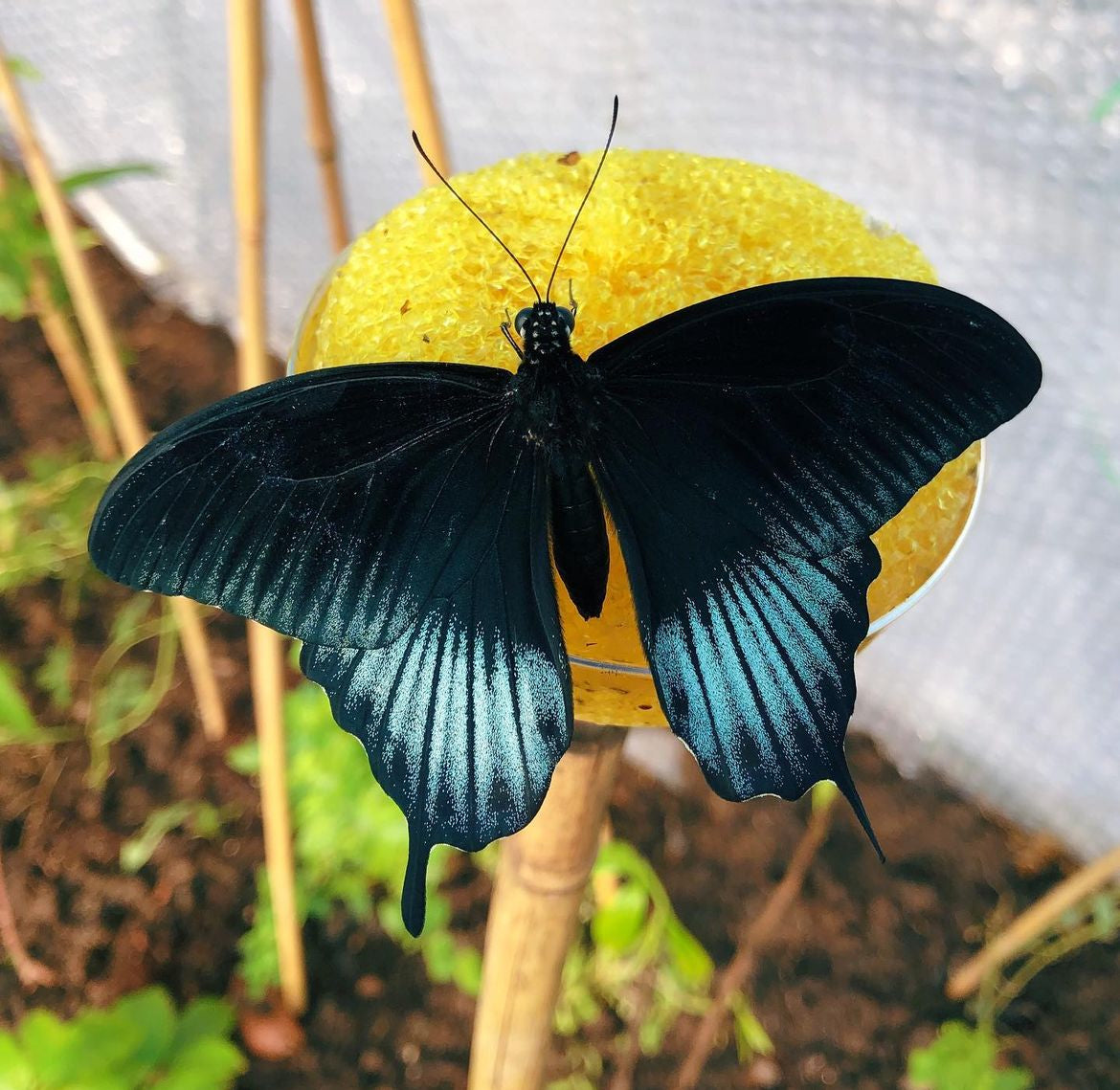
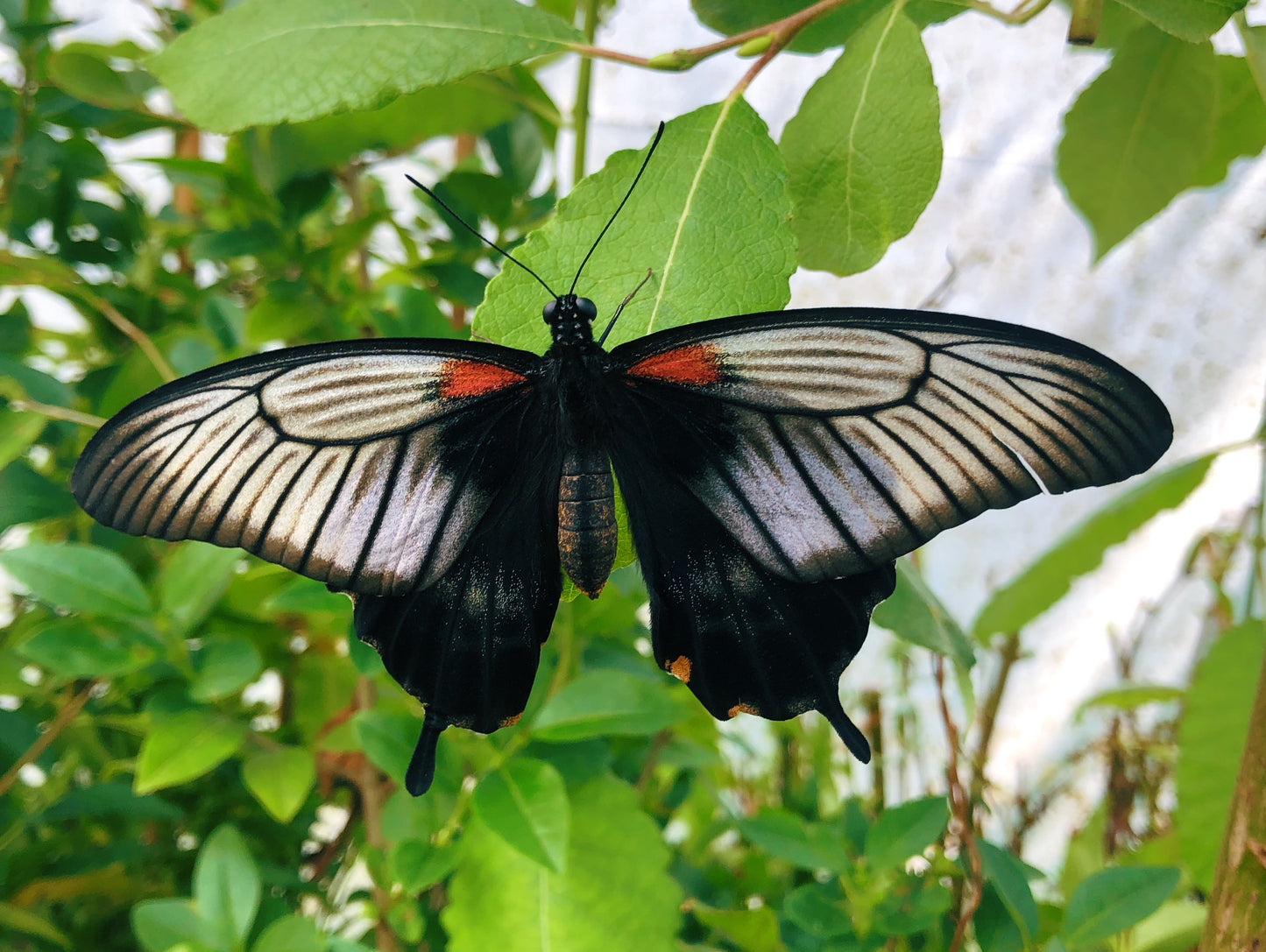
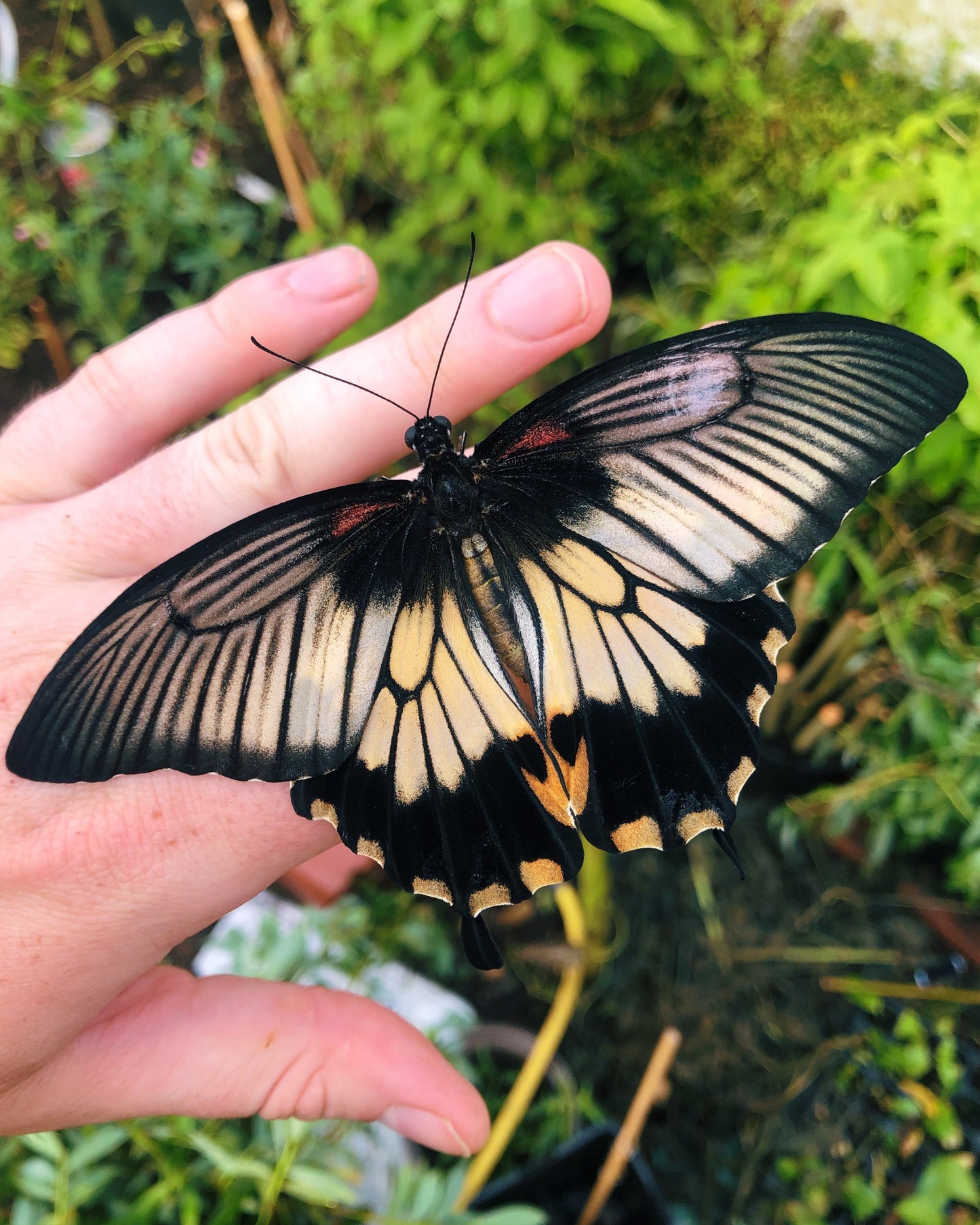
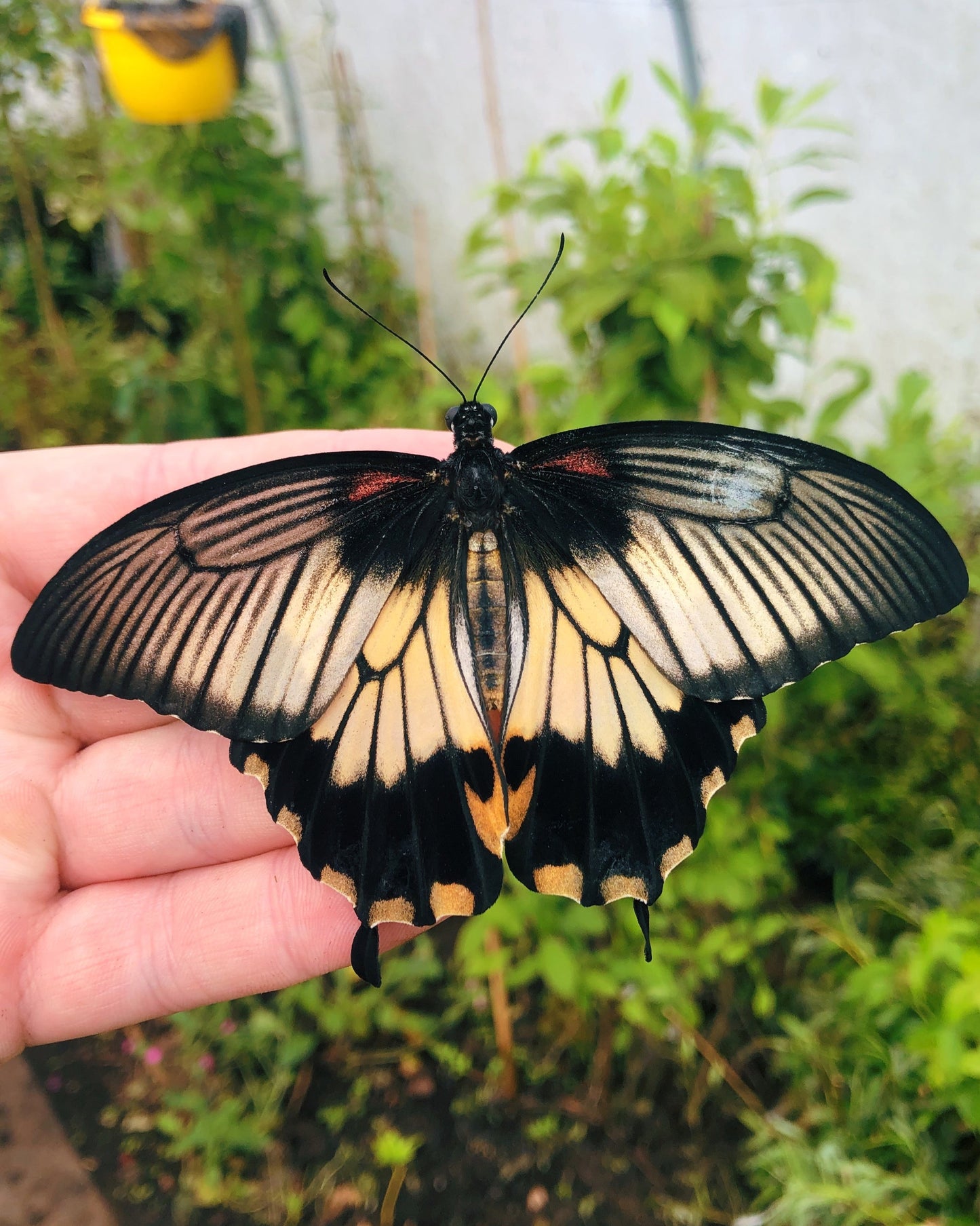
With a wingspan of 10–12 cm, Papilio lowi is a substantial butterfly. Males are consistently jet black, highlighted by elegant silver-blue striping, while females display multiple colour forms, many of which are mimetic. These female forms closely resemble toxic, distasteful red-bodied swallowtails such as Pachliopta and Atrophaneura, offering effective protection from predators through visual mimicry.
In the wild, the Yellow Mormon inhabits lowland and montane forests, most commonly along forest edges and clearings where nectar sources and host plants are abundant. Adults are active and strong flyers, frequently seen visiting flowering plants. Males are notably territorial, regularly chasing away rivals while searching for receptive females. Females typically remain closer to host plants, where eggs are laid singly.
The caterpillars of Papilio lowi feed on a range of Rutaceae host plants. In the wild these include Citrus, Murraya, and Zanthoxylum, while in captivity the species readily accepts Choisya and Skimmia, making it well suited to rearing. Early-instar larvae exhibit bird-dropping mimicry, providing camouflage from predators. In the final instar, larvae transform into bright green caterpillars with snake-like markings.
When disturbed, the caterpillar deploys a specialised defensive organ known as the osmeterium - a forked, orange structure extruded from behind the head that emits a pungent scent and mimics a snake’s tongue. This behaviour is characteristic of swallowtail butterflies and is particularly effective at deterring predators.
With its dramatic sexual dimorphism, engaging larval defences, and ease of care, Papilio lowi is a highly desirable species for butterfly houses, educational collections, and private rearing projects.
Care & Rearing Information
- Host Plants: Citrus; Choisya; Skimmia; Phellodendron; Zanthoxylum
- Difficulty: Easy (1/10), suitable for beginners
- Conditions: Room temperature; thrives in warm, bright environments
- Life cycle: Continually brooded; adults live for up to one month
Share