Bugs & Butterflies UK
GREEN Sunny Stick Insect EGGS (Sungaya inexpectata)
GREEN Sunny Stick Insect EGGS (Sungaya inexpectata)
Couldn't load pickup availability
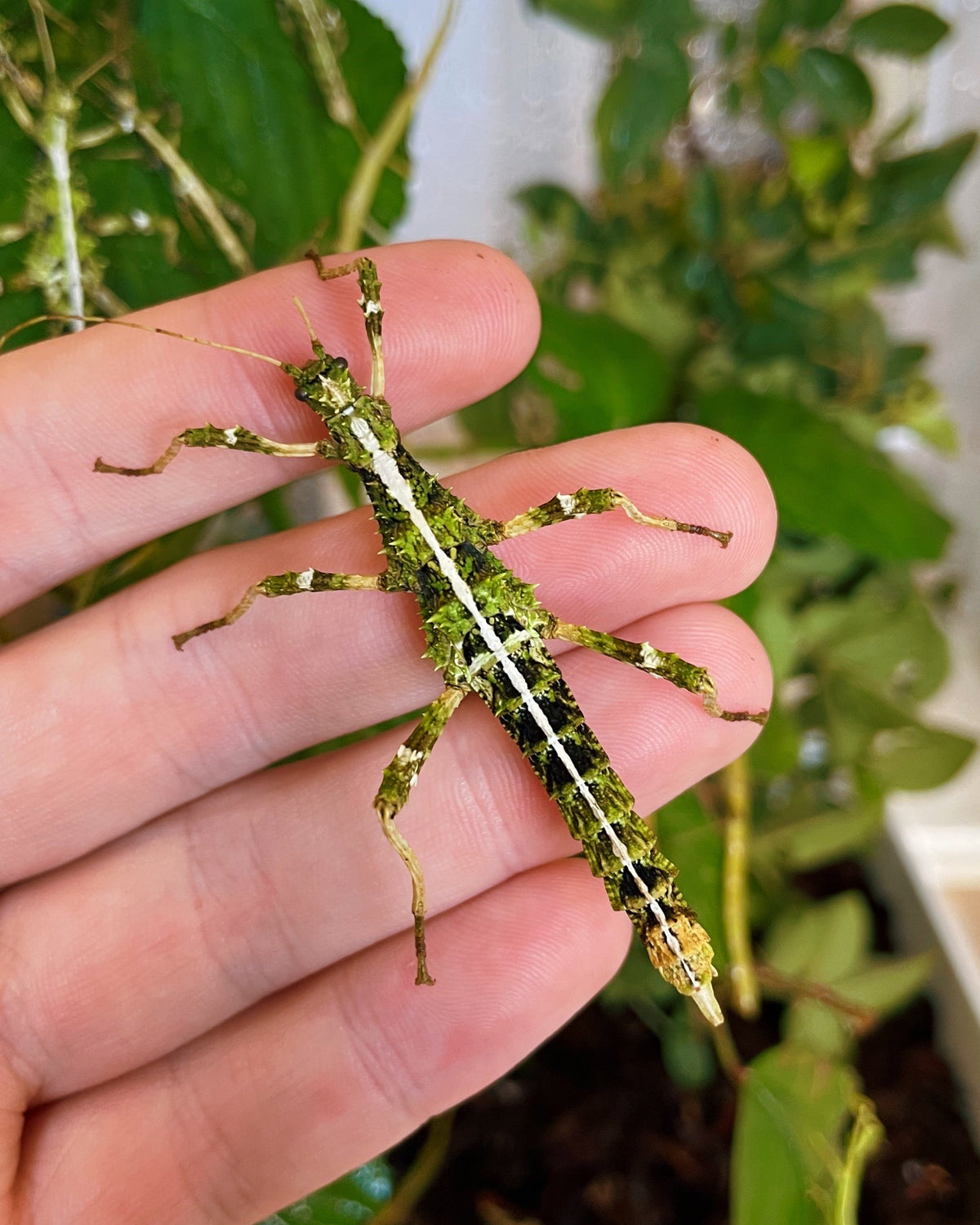
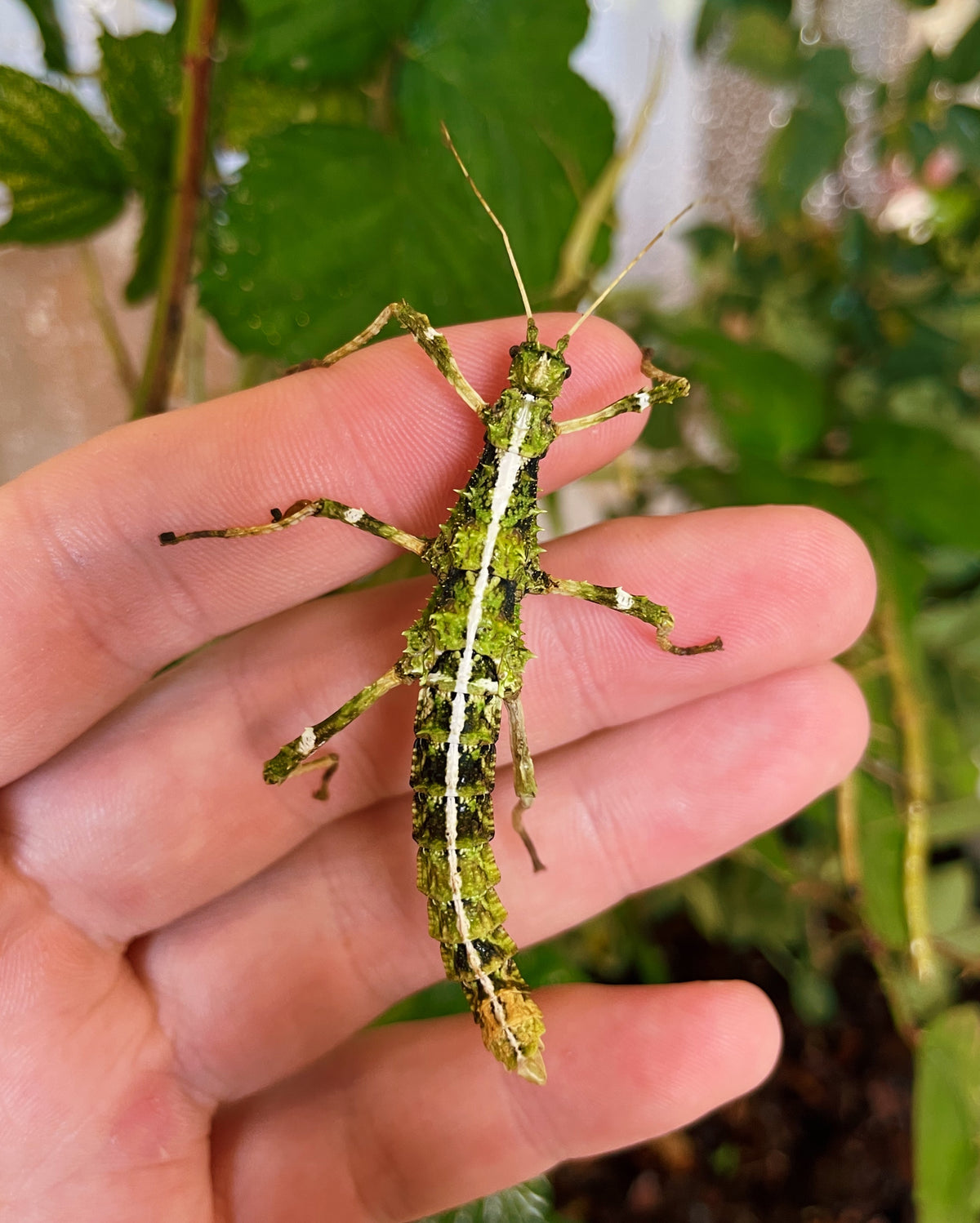
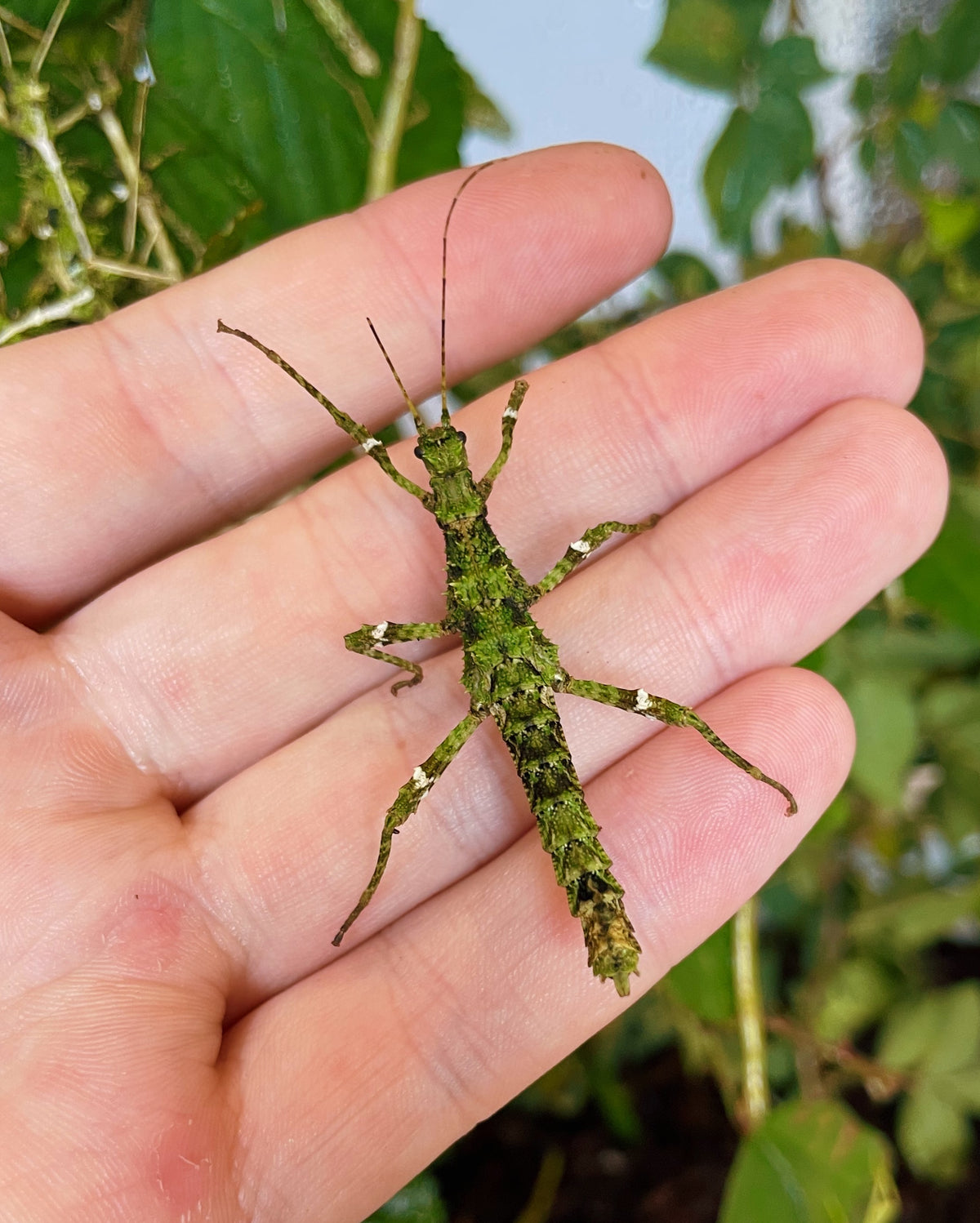
The Sungay Stick Insect (Sungaya inexpectata) is a fascinating species native to the Philippines, renowned for its unusual, heavily textured appearance and excellent camouflage. With their rough, spiny bodies and mottled brown colouration, these remarkable insects closely resemble pieces of bark and twigs, allowing them to blend almost perfectly into their surroundings.
Females develop into robust, broad-bodied adults, whilst males are smaller and more slender. Both sexes are wingless and generally slow-moving, making them particularly interesting insects to observe.
A hardy, relatively straightforward species to maintain, Sungay Stick Insects are an excellent choice for beginners and experienced keepers alike. Their distinctive appearance and manageable size make them a wonderful addition to any insect collection!
Host plants (diet) - Bramble/Blackberry (Rubus fruticosus agg.) is ideal and readily available year-round. Rose (Rosa), Raspberry (Rubus idaeus) and other suitable Rubus species may also be accepted.
Environmental conditions - Ideally maintained at 20–26°C with moderate to high humidity (approximately 60–80%). Light misting every day or two is recommended, alongside good ventilation to prevent stagnant, excessively damp conditions. Normal warm indoor temperatures are generally suitable.
Difficulty - Easy (2/10)
Hatch time - Approximately 3–6 months, depending on temperature and incubation conditions.
Size - Females approximately 8–9 cm; males around 5–6 cm in body length.
Lifespan - Approximately 10–14 months from hatching, depending on temperature and sex.
Reproduction - Both sexual and parthenogenetic reproduction are possible, meaning females can produce viable eggs without males. Females drop their eggs onto the enclosure floor, where they can be collected and incubated separately.
Important - Although this species benefits from relatively high humidity, good ventilation is essential. Avoid waterlogged substrates and ensure sufficient vertical space for successful moulting.