Bugs & Butterflies UK
Indian Stick Insect EGGS (Carausius morosus)
Indian Stick Insect EGGS (Carausius morosus)
Couldn't load pickup availability
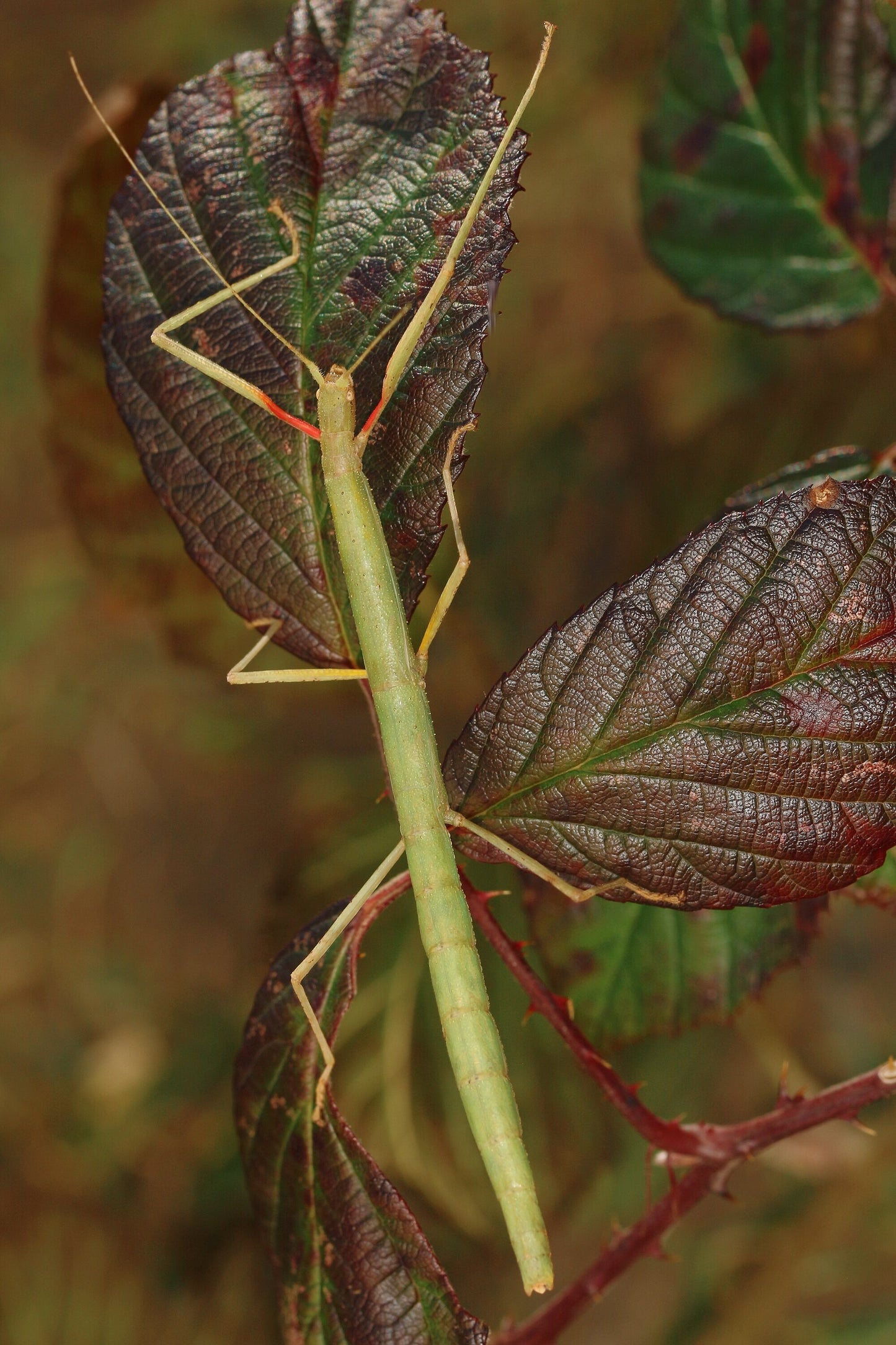
The Indian Stick Insect (Carausius morosus) is one of the most popular and easily maintained species of stick insect in captivity. Originally from India, these fascinating insects are masters of camouflage, with their long, slender bodies and brown or green colouration allowing them to blend almost perfectly into surrounding twigs and vegetation.
An ideal species for beginners and experienced keepers alike, Indian Stick Insects are exceptionally hardy, easy to breed and require very little specialist equipment. They readily feed on a variety of commonly available plants and can be maintained comfortably at normal room temperatures.
A wonderful introduction to insect keeping, particularly suitable for children, schools and anyone interested in observing the fascinating life cycle of stick insects!
Host plants (diet) - Bramble/Blackberry (Rubus fruticosus agg.) is ideal and available year-round. Privet (Ligustrum), Ivy (Hedera helix) and Rose (Rosa) are also readily accepted.
Environmental conditions - Ideally maintained at 18–25°C with moderate humidity (approximately 50–70%). Light misting every other day and good ventilation are recommended. Normal indoor temperatures are generally sufficient, with no additional heating required.
Difficulty - Very Easy (1/10)
Hatch time - Approximately 2–4 months, depending on temperature and incubation conditions.
Size - Adults typically reach 8–10 cm in body length.
Lifespan - Approximately 9–12 months from hatching, depending on temperature and environmental conditions.
Reproduction - Primarily parthenogenetic, meaning females produce fertile eggs without requiring males. Adults regularly drop eggs onto the enclosure floor, making this one of the easiest stick insect species to breed in captivity.
Important - This species breeds readily and can become established outside its native range. Unwanted insects or eggs must never be released into the wild.