Bugs & Butterflies UK
Green Bean Stick Insect EGGS (Diapherodes gigantea)
Green Bean Stick Insect EGGS (Diapherodes gigantea)
Couldn't load pickup availability
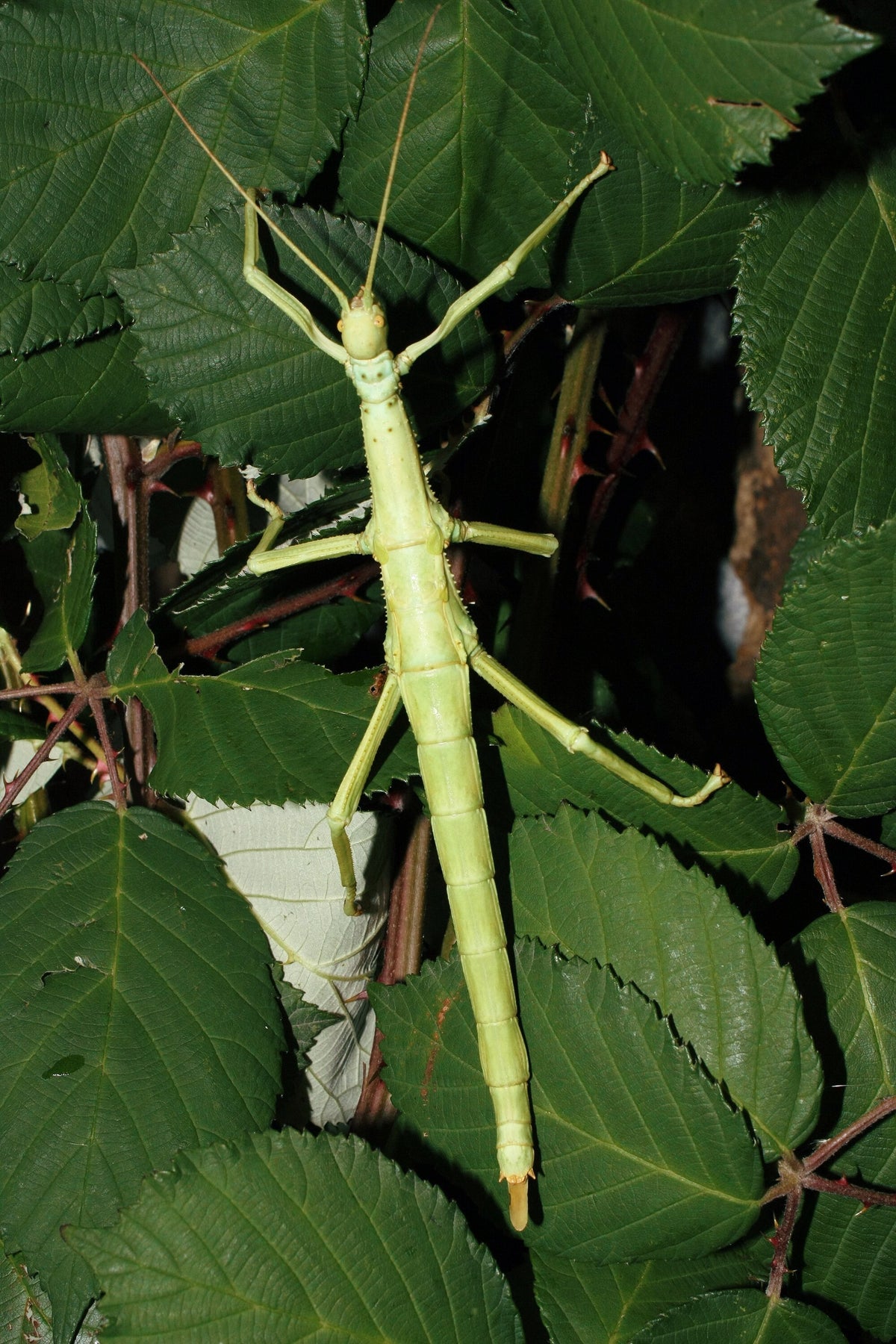
The Giant Lime Green Stick Insect (Diapherodes gigantea) is a spectacular tropical species native to the Caribbean, particularly the Lesser Antilles. Renowned for its impressive size and beautiful lime-green colouration, this remarkable insect is among the most striking stick insects available in captivity.
Females develop into large, robust insects with broad bodies and vibrant green wings, whilst males are considerably smaller, more slender and capable of flight. Their unusual appearance and impressive size make them a particularly attractive species for display.
Relatively straightforward to maintain with suitable conditions, these fascinating insects are an excellent choice for keepers looking for something a little more unusual!
Care Information
Host plants (diet) - Eucalyptus (Eucalyptus) is a commonly used food plant in captivity. Other accepted plants include Oak (Quercus) and Bramble/Blackberry (Rubus fruticosus agg.), although acceptance can vary between individuals and breeding lines.
Environmental conditions - Ideally maintained at 22–26°C with moderate to high humidity (approximately 60–80%). Regular light misting and good ventilation are recommended. A spacious, well-ventilated enclosure is essential to accommodate their impressive adult size and allow successful moulting.
Difficulty - Moderate (4/10)
Hatch time - Approximately 4–8 months, although incubation times can vary considerably depending on temperature and conditions.
Size - Females approximately 13–17 cm; males around 9–12 cm in body length.
Lifespan - Approximately 12–18 months from hatching, depending on temperature and sex.
Reproduction - Sexual reproduction is typical, with both males and females required for reliable production of fertile eggs. Females deposit eggs which can be collected and incubated separately.
Important - Like many large stick insects, this species requires sufficient vertical space for moulting. Enclosures should ideally be at least three times the insect's body length in height, with plenty of suitable surfaces from which to hang.