Bugs & Butterflies UK
Kentish Glory PUPAE (Endromis versicolora)
Kentish Glory PUPAE (Endromis versicolora)
Couldn't load pickup availability
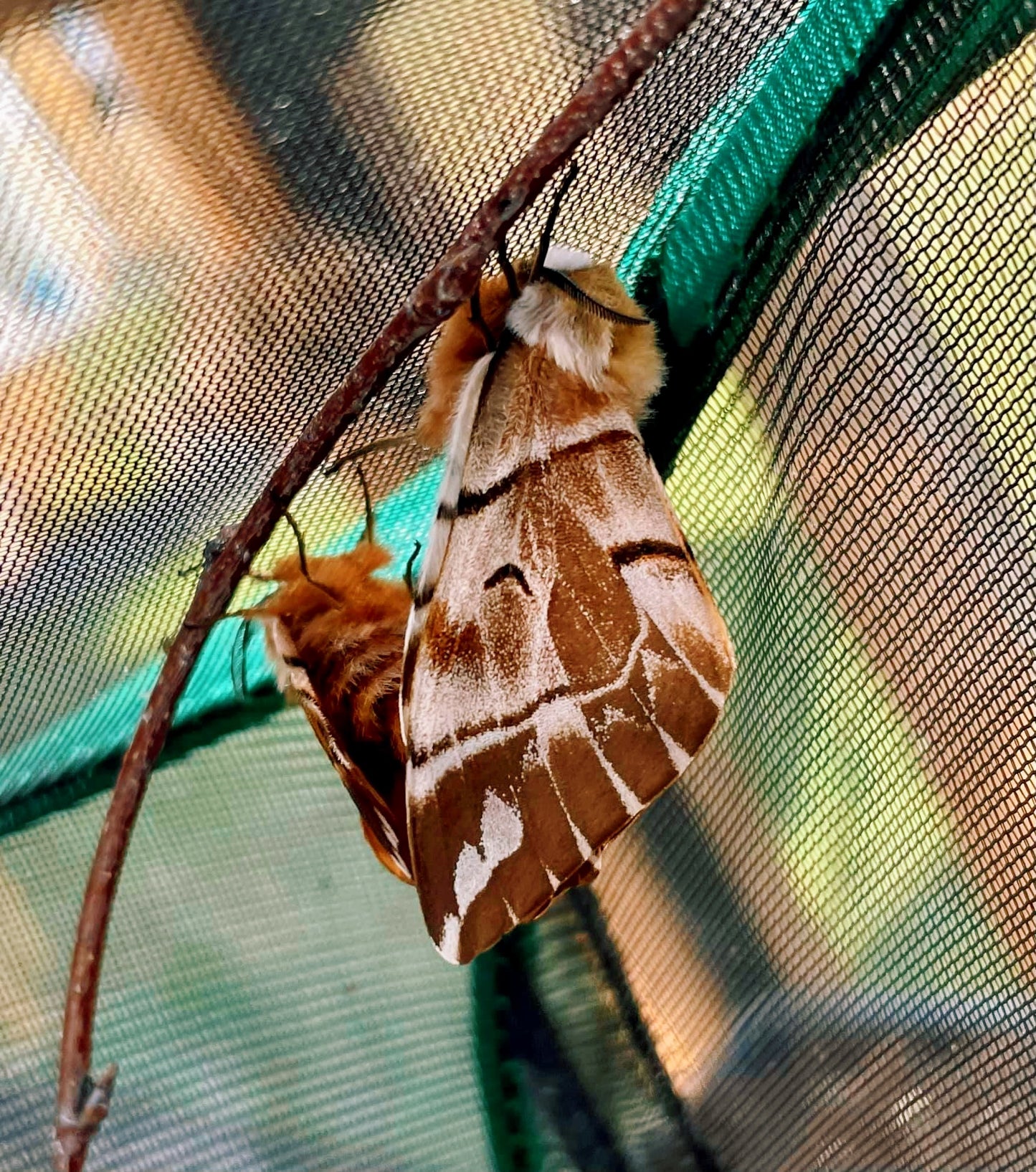
Endromis versicolora, commonly known as the Kentish glory, is a moth species in the family Endromidae. Native to Europe and parts of Asia, it inhabits deciduous and mixed forests, favoring areas where birch trees (Betula), its primary host plants, are abundant. It is considered one of the most beautiful moths in its range.
The Kentish glory is characterized by its strikingly patterned wings. The males, which are smaller and more agile, have reddish-brown forewings with intricate white and gray markings. The females are larger, with broader wings and a paler coloration, adapted for staying relatively stationary while releasing pheromones to attract mates. The wingspan ranges from 5 to 8cm, with females being the larger sex.
Research in its natural habitat indicates this moth lays eggs on young growth, particularly Birch saplings, with larvae emerging in spring to feed on young birch leaves. This would suggest that younger growth is preferable to feed larvae when rearing these caterpillars in captivity. The caterpillars are green with fine stripes and are well-camouflaged among the foliage. Pupation occurs on the soil surface, where the caterpillar spins a very loose webbed cocoon. This species spends the winter as a pupa before emerging as an adult in late winter or early spring.
Difficulty: Easy (2/10)
Temperature: Room temperature or can be reared outdoors.
Lifecycle: Moths emerge early in spring; yellow eggs turn maroon before hatching; pupae are formed underground and emerge the following spring.
This livestock is from mainland Europe and not derived from wild British stocks.