Large Elephant Hawk-moth (Deilephila elpenor) – Care & Information

The Large Elephant Hawk-moth (Deilephila elpenor) is one of the most recognisable and admired moth species native to the UK. With its vivid pink-and-green wings and distinctive snake-like caterpillars, it is a favourite among beginners and experienced keepers alike. This species has expanded its range in recent decades as warmer climates make more of the UK suitable for this summer-flying moth.

Its fast growth, engaging behaviour and striking appearance make D. elpenor one of our most popular native moths to rear. Follow the care guide below for the best results.

Live moth eggs for sale online UK

Freshly emerged Elephant Hawk-moth

This is a perfect example of an adult Deilephila elpenor, it was freshly emerged at the time of this photo being taken
Elephant Hawk-moth Pupae

Egg Care

Elephant Hawk-moth eggs are pale green and should be kept in a closed plastic container to prevent them drying out - this species is particularly sensitive to desiccation.

Egg Care Instructions

  • Keep eggs in a sealed container to maintain humidity.
  • Do not add foliage before hatching—extra moisture encourages mould.
  • Once eggs begin hatching, move hatchlings to a new container with host plant leaves using a soft paint brush.
Live butterflies and moths for sale online UK. Order eggs, caterpillars, pupae, and cocoons. Watch the lifecycle unfold with insects to rear at home!

Young Elephant Hawk-moth caterpillars

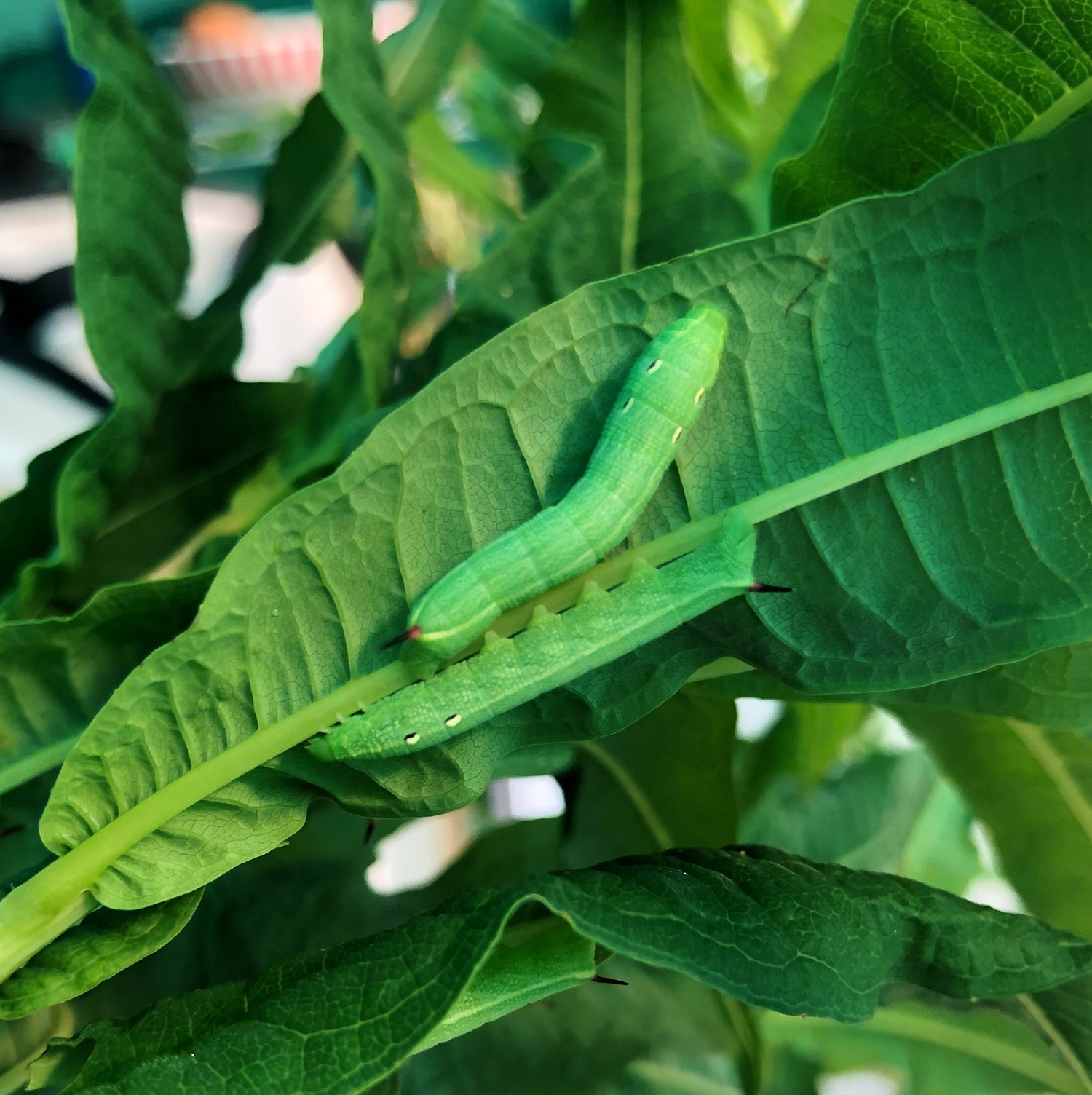
All larvae of Deilephila elpenor are green in the early stages. Most in the last two instars are brown or grey, but some remain green.

Elephant Hawk-moth Eggs

Caterpillar Care

Best Host Plants for Deilephila elpenor

The species feeds on a variety of native and garden plants, including:

  • Willowherbs (Epilobium species)
  • Fuchsia
  • Bedstraw (Galium)
  • Himalayan Balsam (Impatiens glandulifera)
  • Grapevine (Vitis)

Willowherb is especially recommended as it grows abundantly across the UK and supports rapid caterpillar development, but the other listed host plants are certainly suitable.

.

Rearing Conditions

  • Keep early instars in plastic containers to prevent dehydration.
  • Move caterpillars to mesh cages once they reach the 3rd or 4th instar.
    This improves airflow and reduces disease spread.
  • Growth is very fast, with larvae reaching full size in around 3 weeks.
  • Pupation typically occurs one week later, as the caterpillars first spend a few days wandering.

Caterpillars are green in early stages; most turn brown or grey in later instars, although some remain green throughout.

Final instar larva

This larva is in the final instar before pupation and still has its green colouration - most become brown by this stage, but all possess striking eye markings and resemble snakes!

Pupation

When mature, Elephant Hawk-moth caterpillars begin to wander in search of a pupation site.

.

How to Provide Pupation Conditions

You can leave the mature larvae to pupate at the base of their enclosure, however you may have better results by providing a substrate for them to pupae among.

In the wild, larvae burrow into soil or leaf litter, forming a small chamber like a loose cocoon. In captivity, you may use:

  1. A tray of compost/coco coir, or
  2. A container filled with paper towel – simple, clean and effective, but may require some misting to prevent desiccating pupae.

This species overwinters as pupae, typically for at least six months - from August/September until the following May/June. Rarely, a few pupae may emerge the same year to produce a small, partial second brood.

.

Important Notes

  • After the caterpillars burrow, wait two full weeks before removing pupae.
    Newly formed chrysalides are soft and easily damaged.
  • Once hardened, place pupae in a sealed container with paper towel.
  • Refrigerate until May to match natural emergence timing.
  • Early emergence is possible at room temperature, but prolonged warmth may harm pupae.

Adult Moths

Adult Elephant Hawk-moths are brilliantly coloured, with pink wings marked by olive-green patches.

.

Adult Care

Adults will sometimes feed on their own in a naturalistic setup but often benefit from hand feeding.:

  • Provide cut flowers for natural nectar feeding, or
  • Hand-feed with sugar solution, which yields significantly better breeding results.

A 60 cm mesh cage comfortably houses multiple adults; a 90 cm cage is suitable for larger groups.

.

Best Nectar Sources

  • Honeysuckle
  • Red Valerian
  • Jasmine
  • Buddleia

These plants are favourites in the wild and in our butterfly house and provide excellent nourishment for adults.

.

Releasing Adults

This species is native to the UK, and adults may be released responsibly.
However, timing is crucial: release only during late spring to mid-summer, when natural nectar sources are abundant.